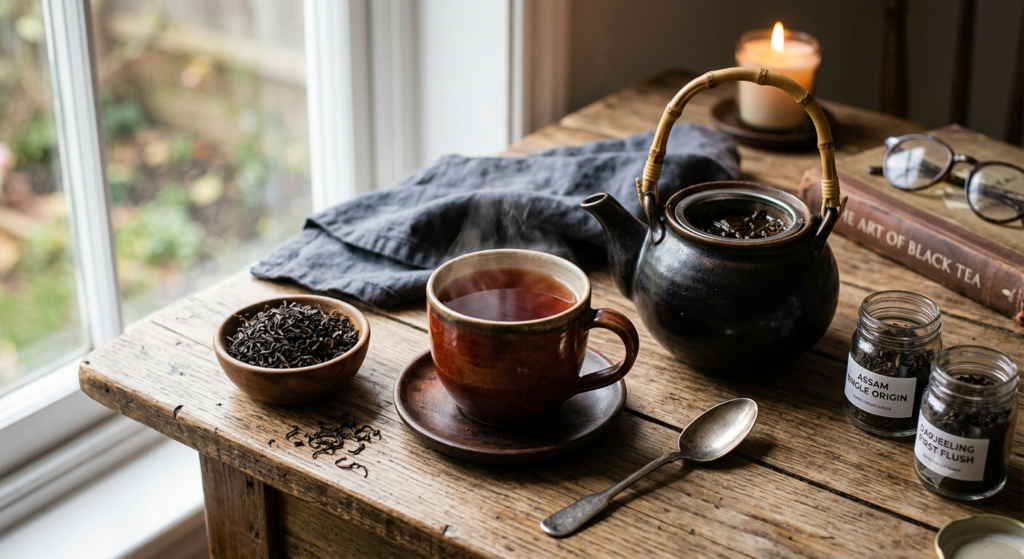
Despite the massive variety of colours and flavours available on the market, all true tea—including black, green, white, and oolong, originates from the exact same plant: Camellia sinensis.
What sets black tea apart is a natural process called oxidation.
After the leaves are harvested, they are withered, rolled, and left exposed to oxygen.
This triggers a chemical reaction that turns the vibrant green leaves a deep amber-brown, developing those rich, robust, and malty flavour profiles we love.
Once the perfect flavour profile is reached, the leaves are heated to stop the oxidation, locking in the complex taste.
Because it is fully oxidized, black tea typically boasts a bolder flavour and a higher caffeine content than its green or white counterparts, making it the ultimate morning pick-me-up or mid-day reviver.
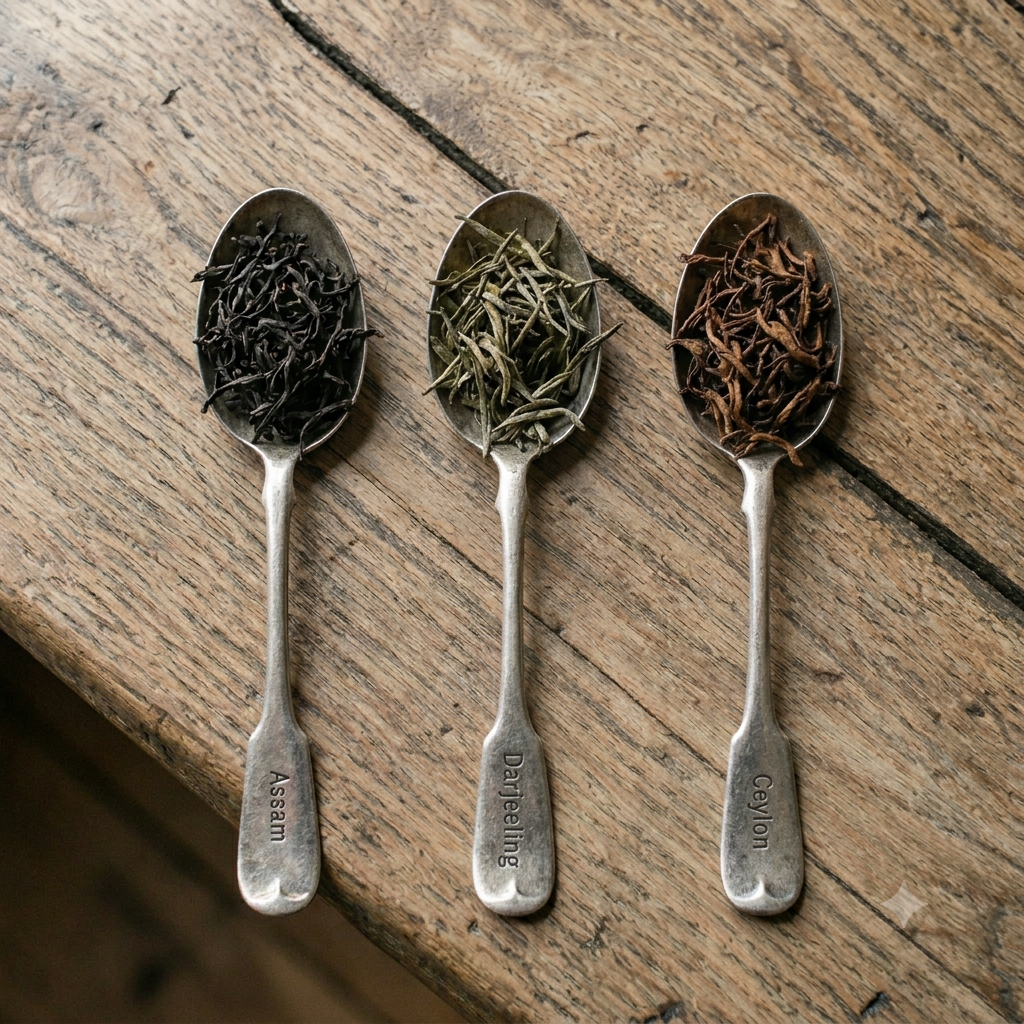
These are unblended teas named after the specific geographic regions where they are grown. They allow you to taste the unique terroir (the soil, climate, and altitude) of the land.
Grown in the lowlands of India, Assam tea is famous for being exceptionally bold, rich, and distinctly malty. It’s the perfect base for a strong morning brew.
Known as the “Champagne of Teas,” this high-altitude Indian tea is delicate, floral, and slightly fruity, often carrying a coveted “muscatel” grape note.
Hailing from Sri Lanka, Ceylon teas are wonderfully balanced, bright, and crisp, often carrying a subtle citrusy undertone.