Orange Pu-Erh

The Master Craft Behind Orange Pu-Erh

(Xiao Qing Gan)

In the world of Chinese tea, few creations showcase the marriage of geography, craft, and time quite like Xiao Qing Gan, a single-origin specialty originating from the coastal orchards of Guangdong and the high-altitude forests of Yunnan.

Here is an insider look at the meticulous, multi-step process behind this highly prized artisanal tea.

The Union of Two Terroirs

Authentic Xiao Qing Gan relies on a precise geographical partnership.

1 – The Core: Dark, ripened Shou Pu Erh sourced from the nutrient dense soils of Yunnan, selected for its smooth, woody profile.
2 – The Vessel: Young, aromatic green young citrus harvested exclusively from the Xinhui district in Guangdong.

Xinhui is celebrated across China for its microclimate, where the confluence of three rivers creates mineral rich soil.
The citrus peels grown here possess an unusually high concentration of essential oils, making them highly sought after for both tea production and traditional Chinese medicine.

Shop today!
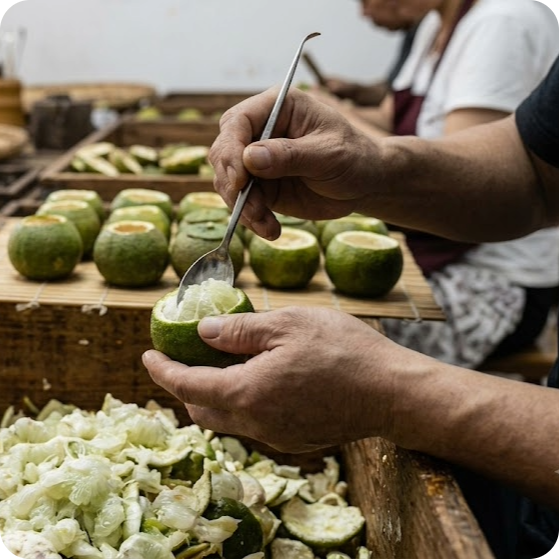
Close up of an artisan hand scooping the fruit flesh out of a small green citrus rind using a specialised spoon tool, with more hollowed green rinds drying on wooden racks in the background.

Hand Crafted Extraction

The physical preparation of the citrus is a delicate art, executed entirely by hand to preserve the integrity of the rind.

1- Selective Harvesting: The green citrus is harvested in late summer, at the precise moment when the peel is rich in volatile oils but has not yet developed the sugars of fully ripe fruit.

2- Precision Decapitation: Artisans slice a small, clean circular lid from the crown of each fruit.

3- Hollowing: Using specialised tools, the flesh is completely extracted without puncturing the outer rind, leaving behind a pristine, fragrant spherical shell.

4- Purification: The empty rinds are washed and air dried, preparing the organic surface to act as an absorbent curing chamber.


Curing and Natural Fusion

Once the shells are prepped, the final transformation begins.

1- Stuffing: The hollowed rinds are hand packed with loose leaf Pu Erh, ensuring the leaves are densely settled but still allow for crucial air circulation.

2- The Sun Cure: Traditional producers dry the stuffed citrus under the sun for several days. This slow dehydration draws the volatile citrus oils inward, allowing them to thoroughly saturate and cure the fermenting tea leaves.

3- The White Frost: High quality Xiao Qing Gan often develops a fine, white crystalline coating on the surface. This is a natural phenomenon called Limonene frost, where the essential oils rise to the surface and crystallise during the curing process, serving as a signature mark of premium provenance.

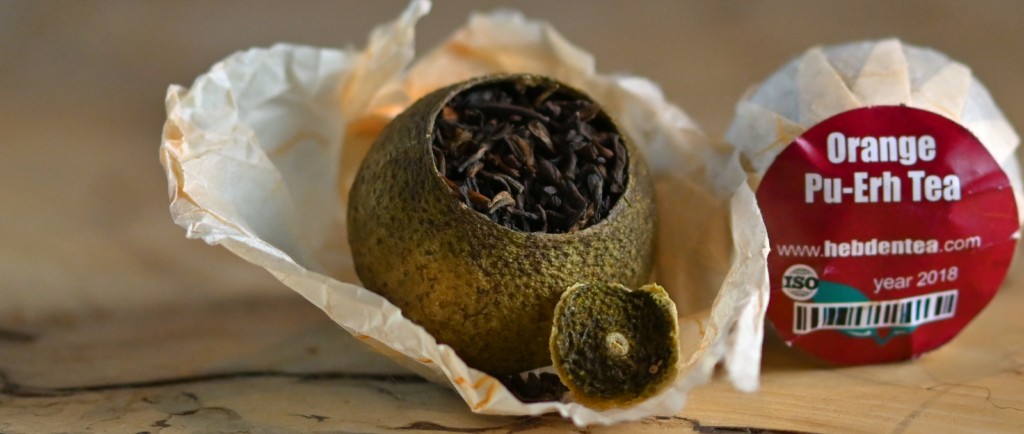
The resulting tea is a self contained masterpiece. When brewed, the dark, grounding depths of the aged Yunnan Pu Erh are effortlessly brightened by the clean, sophisticated top notes of the cured citrus rind.

How to Store Your Orange Pu-Erh Tea

Because Xiao Qing Gan is a beautiful fusion of aged tea and natural citrus peel, storing it correctly is essential to preserve its complex aromas.

When stored correctly in a cool, dry, and dark place, your Orange Pu-Erh will continue to age beautifully, allowing the rich woody notes of the tea and the bright citrus oils to harmonise even further.

To keep your tea tasting its best, follow these simple guidelines:

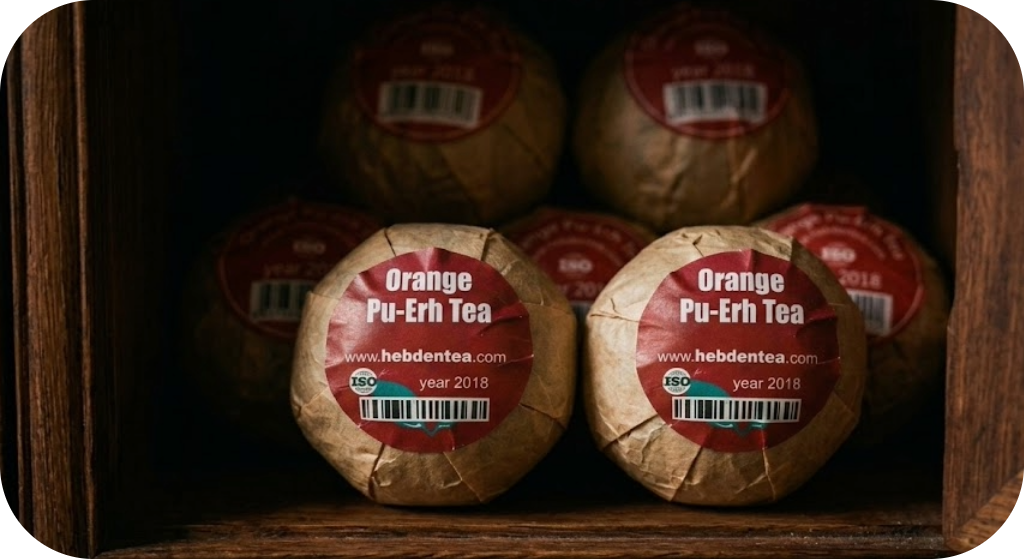
A group of six individually paper-wrapped Xiao Qing Gan Orange Pu-Erh tea balls from Hebden Tea, safely stored inside the dark, protected, and shadowy interior of a rich natural wood cupboard, away from sunlight.

Keep it Airtight: Store your tea balls in a sealed tin, a glass jar, or their original airtight packaging. This prevents the delicate, volatile citrus oils from evaporating and losing their vibrant scent.

Avoid Moisture: Pu-Erh loves a dry environment. Keep the container in a cupboard away from steam, kettles, or sink areas, as excess humidity can ruin the dried rind.

Store Away from Strong Odours: Tea leaves are highly absorbent and will easily pick up surrounding smells. Keep your Orange Pu-Erh away from spices, coffee, or kitchen herbs.

No Direct Sunlight: Store your tea in a dark cupboard or an opaque tin. Direct sunlight can degrade the quality of both the tea leaves and the citrus peel over time.