You have invested in beautiful loose leaf tea, a first flush Darjeeling, a shaded Japanese Gyokuro or a high mountain Taiwanese oolong. Now the question is: how do you keep it tasting the way it did when you first opened the packet?
Improper storage is the single most common reason why good tea disappoints. The leaves are delicate, living material. Expose them to the wrong conditions for a few weeks and even the finest single-origin tea will taste flat, stale, or worse – like whatever was stored near it in the cupboard.
Improper storage is the single most common reason why good tea disappoints. The leaves are delicate, living material. Expose them to the wrong conditions for a few weeks and even the finest single-origin tea will taste flat, stale, or worse – like whatever was stored near it in the cupboard.
This guide covers everything you need to know about storing loose leaf tea correctly: the enemies to avoid, the containers that work, where to keep your tea and how long each type lasts.
Plastic is slightly porous can absorb and impart odours over time and is not recommended for long-term tea storage.
The original paper bag your tea arrived in is not suitable for storage beyond a few days because it offers no protection against moisture, light or oxygen.
Transfer your tea to a proper container as soon as possible.
A kitchen cupboard away from the cooker and kettle is ideal for most teas. A pantry or larder is even better.
The ideal spot must be:
Away from heat sources like a cooker, kettle, radiator or direct sunlight through a window.
Inside a closed cupboard or drawer.
Away from steam, the kettle or the dishwasher.
Away from strong smells and not next to coffee, spices or cleaning products.
Tea has five natural enemies. Understanding what damages tea at a molecular level makes the rest of this guide make intuitive sense.
Tea leaves are hygroscopic meaning they readily absorb water from the surrounding air. Even small amounts of humidity cause the leaves to oxidise rapidly and can promote mould growth. This is the most common cause of tea going stale. A relative humidity above 60% is enough to begin degrading your tea within weeks.
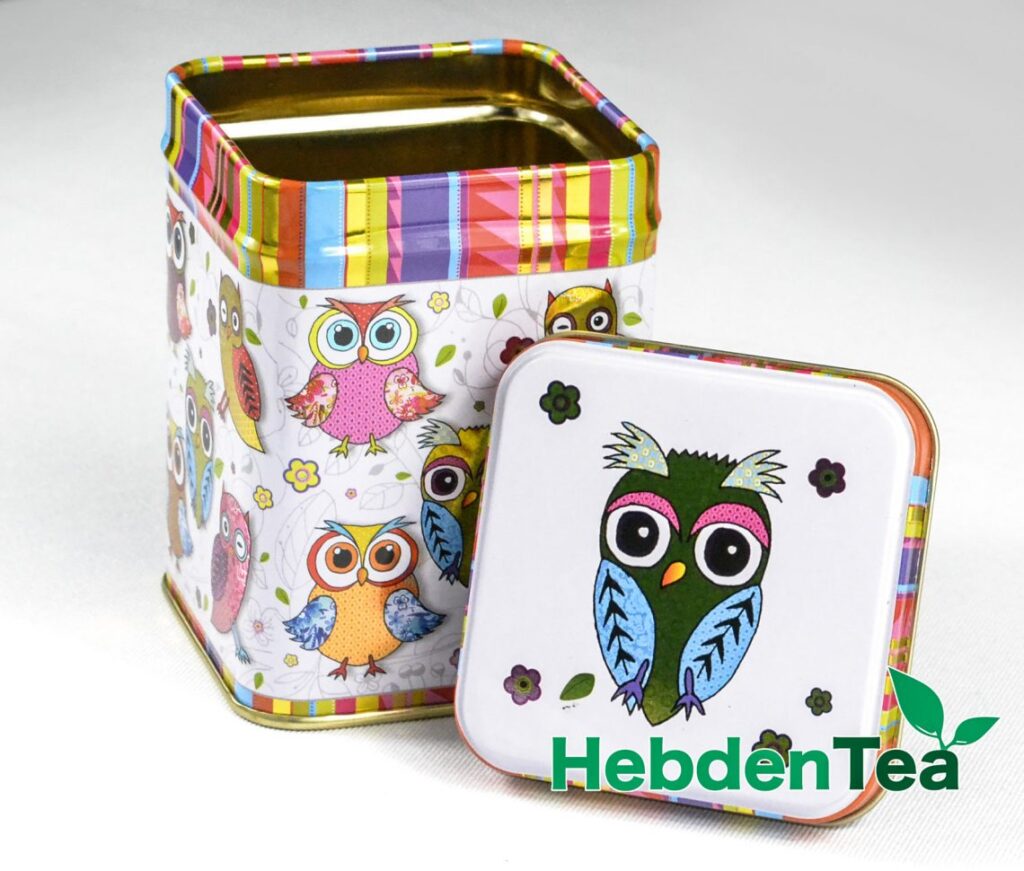
A Note on Ceramic Caddies: While decorative ceramic jars look beautiful on a counter, many feature loose-fitting lids that fail to keep air out. If you choose to use ceramic, ensure it features a high-quality rubber or cork gasket to maintain a truly airtight seal.
Ultraviolet light degrades the chlorophyll, amino acids and aromatic compounds in tea leaves. Green teas are particularly vulnerable. A green tea left in a clear glass jar on a sunny windowsill can lose most of its character within days. Always store tea away from direct sunlight.
High temperatures accelerate the oxidation and degradation of the delicate chemical compounds, volatile oils, and amino acids in tea leaves. When tea gets too warm, it quickly loses its flavor profile, aroma, and vibrancy, leaving you with a flat, stale brew. To prevent this thermal degradation, tea must be stored in a consistently cool environment, ideally below 20°C (68°F) and kept far away from heat sources like ovens, kettles, radiators, or sunny windowsills.
The fridge is one of the worst places to store tea.
Fridges are humid, full of food odours, and every time you take the container out, condensation forms on the cold surface when it meets the warm kitchen air.
This moisture gets into the tea.
The only exception some specialists make is for very delicate green teas in sealed, airtight pouches but even then, the fridge is rarely necessary and always carries risk.
Tea does not “expire” in the way that milk does, it will not make you ill after its best-before date.
What it loses is quality: flavour, aroma, and vibrancy.
Here are the realistic shelf lives under good storage conditions:
| Tea / Infusion Type | Shelf Life | Notes |
|---|---|---|
| White tea | 1–2 years | Minimal processing makes it sensitive to moisture and light. |
| Green tea (Japanese) | 6–12 months | Most sensitive; consume within 6 months for best flavour. |
| Green tea (Chinese) | 6–18 months | Pan-fired styles are slightly more stable than steamed. |
| Yellow tea | 6–12 months | Rare and delicate; treat like green tea. |
| Oolong (lightly oxidised) | 1–2 years | High mountain oolongs are relatively stable. |
| Oolong (roasted) | 2–3 years | Roasting acts as a natural preservative. |
| Black tea | 2–3 years | The most forgiving type; full oxidation makes it stable. |
| Pu-erh | Indefinitely | Improves with age like wine when stored correctly. |
| Herbal infusions (Chamomille, Peppermint, etc.) | 2-3 years | Essential oils fade over time, leading to a loss of aroma and therapeutic benefits. |
| Fruit infusions | 2 years | Dried fruit pieces absorb ambient moisture easily. Keep strictly airtight to prevent mold or stickiness. |
Note: These are guidelines for loose leaf tea stored in an airtight container in a cool, dark place.
Poor storage conditions will shorten these timelines significantly.
These are the most sensitive teas you will encounter. Green tea, particularly delicate Japanese varieties like Gyokuro and Shincha, should be consumed within six months of purchase for the best experience. Store in an opaque, airtight tin in the coolest part of your kitchen. If you buy in bulk, divide it into a smaller everyday tin and a larger sealed backup.
Lightly oxidised oolongs (such as Taiwanese high mountain styles) should be treated more like green teas, cool, dark, and airtight. Heavily roasted oolongs are more forgiving and can be stored at room temperature for longer periods. Some roasted oolongs can even be re-roasted at home if they begin to taste a little flat after extended storage.
Assam, Darjeeling, and other black teas are the most forgiving to store. Full oxidation during production makes them naturally more stable. That said, they still benefit from a good tin, particularly to protect against strong odours from surrounding cupboard items.
Pu-erh is unique: it is the only tea that is designed to be aged and actually improves over time, provided storage conditions are right. Pu-erh needs to breathe slightly, unlike other teas, it should not be stored in a completely airtight container. A clay jar or a wooden box in a cool, ventilated space with moderate humidity is ideal. Avoid storing pu-erh near strong odours, as it will absorb them readily.
Unlike true teas, herbal and fruit infusions are made from a wide variety of dried botanicals, such as hibiscus, chamomile, peppermint, and dried berry pieces. Because these ingredients contain natural sugars and essential oils, they are highly sensitive to humidity and can attract pantry pests. If moisture gets into a fruit blend, the pieces can become sticky, clump together, or even develop mould. Always store herbal and fruit infusions in a strictly airtight, opaque tin. Keep them well away from strong-scented teas (like Earl Grey or smoked teas as such as lapsang souchong), as delicate florals and herbs will easily absorb those heavy aromas.